Inspired by this article in the San Francisco Chronicle this week, I've decided the word for the week will be chaptalization.
A relatively rare process, it is one by which the winemaker adds sugar (or honey, in the case of the ancient Romans) to fermenting wine in order to raise the alcohol level--not the sweetness. This is typically done in cool climates, where the grapes might not reach their full maturity, and thus ideal sugar levels. Without ripeness and sugars, there won't be enough material for the yeasts to convert to alcohol at the proper levels. Some winemakers say for certain vintages chaptalization is necessary to stabilize the wine--others say it can cause an imbalance. It depends on the harvest year and the climate. It's a fairly common practice in Champagne, Austria and Germany, less so in the New World, though it is used in New Zealand and Oregon.
How to use this term: to look ridiculously pompous at wine tastings. "Oh my gawd, Buffy--this Beaujolais Nouveau is 16.5 percent alcohol. They must have used chaptalization."
NB: The process is named after Jean-Antoine Chaptal, "Napoleon's minister of the interior, who gave it the French government's official endorsement and promoted it in his 1801 book 'Traite Theotique et Pratique Sur la Culture de la Vigne.'"
Showing posts with label Winemaking. Show all posts
Showing posts with label Winemaking. Show all posts
Friday, February 29, 2008


Friday, February 1, 2008
Wine Word of the Week: Fermentation
Spoiler alert: for those of you who are particularly squeamish, learning about the winemaking process may ruin wine for you. If you know you’re one of those people, you may want to stop reading.
Wine is awesome--and I mean that in the truest sense of the word. That grapes may be turned from fruit into a beverage with flavor and aroma complexity that can include leather, tobacco, petrol, black pepper, lavender, peach, apple, pear, pineapple, and horse butt (seriously) is truly awe-inspiring. The process by which wine is made is one of the many small miracles of our world. The process is a complex one, with many variables—below I’ve tried to give a brief overview of fermentation. I welcome any additions, comments and questions. Fermentation processes will vary by region and varietal.
So, the grapes are harvested and delivered to the winery (a separate post is needed this part of the winemaking process). The grapes are then fed or dumped into a crusher/destemmer, which removes the stems (obviously) and crushes the grapes for the first time. Depending on the winemaker’s choices, all the grapes will be crushed, or just some, or none (as for carbonic maceration). What comes out of the crusher/destemmer is now called must. The must is either left with the skins and seeds in large vats or plastic bins to produce red wine, left for a short time to produce rosé, or, in the case of white wines, pressed off immediately.
In the case of red wine, the must is left for a period of between several days and several weeks to fully realize the tannins from the skins and seeds. At this point the fermentation process usually begins for red wines. For white, the must is put through a presser, and the juice is transferred to stainless steel or concrete vats or storage bins. When the wine is pressed out will depend on the winemaker’s decision.
Fermentation is, simply put, the process by which sugars become alcohol. This process is done through yeast and bacteria. Basically, the yeast eats the naturally-occurring sugars, and the by-product is alcohol. There are typically two kinds of yeasts used for this process: native yeast and cultured yeast.
Native yeasts are naturally occurring—they can be found on the grapes, in the air, or even in the winery. Many winemakers, especially old-school European winemakers, consider the native yeast to be part of the terrior, and will not use cultured yeasts. Cultured yeasts are, just like they sound, yeasts specially selected and prepared for the winemaking process.

Temperatures are carefully controlled during the fermentation process. White wine is usually fermented between 64-68 °F (18-20 °C), and reds at 85 °F (29 °C). If the temperatures go up, some of the flavors and alcohol are lost, if the juice gets too cold, the yeasts will die or go into shock, resulting in “stuck fermentation”—meaning the fermentation process will stop, and the sugars in the wine will remain. This, incidentally, is how White Zin was “discovered.”
For most red wines, and infrequently for whites, another process will begin: malolactic fermentation. This is the process by which malic acids (think tart green apples) will turn into “softer” lactic acids (think dairy). Although this process can happen naturally (as with native yeasts) more often than not a winemaker will add malolactic bacteria to the wine. The bacteria will eat the malic acid and leave the lactic acid. Mmm…bacteria. Don’t worry--by the final process the yeasts and bacteria will no longer be present.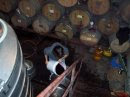
At this point, essentially, the winemaker carefully watches and tests the alcohol levels, amongst other factors, until he decides the wine is ready to be finished—or the yeast stops working on his own. At this point the aging process begins. But that’s another story.
Wine is awesome--and I mean that in the truest sense of the word. That grapes may be turned from fruit into a beverage with flavor and aroma complexity that can include leather, tobacco, petrol, black pepper, lavender, peach, apple, pear, pineapple, and horse butt (seriously) is truly awe-inspiring. The process by which wine is made is one of the many small miracles of our world. The process is a complex one, with many variables—below I’ve tried to give a brief overview of fermentation. I welcome any additions, comments and questions. Fermentation processes will vary by region and varietal.
So, the grapes are harvested and delivered to the winery (a separate post is needed this part of the winemaking process). The grapes are then fed or dumped into a crusher/destemmer, which removes the stems (obviously) and crushes the grapes for the first time. Depending on the winemaker’s choices, all the grapes will be crushed, or just some, or none (as for carbonic maceration). What comes out of the crusher/destemmer is now called must. The must is either left with the skins and seeds in large vats or plastic bins to produce red wine, left for a short time to produce rosé, or, in the case of white wines, pressed off immediately.
In the case of red wine, the must is left for a period of between several days and several weeks to fully realize the tannins from the skins and seeds. At this point the fermentation process usually begins for red wines. For white, the must is put through a presser, and the juice is transferred to stainless steel or concrete vats or storage bins. When the wine is pressed out will depend on the winemaker’s decision.
Fermentation is, simply put, the process by which sugars become alcohol. This process is done through yeast and bacteria. Basically, the yeast eats the naturally-occurring sugars, and the by-product is alcohol. There are typically two kinds of yeasts used for this process: native yeast and cultured yeast.
Native yeasts are naturally occurring—they can be found on the grapes, in the air, or even in the winery. Many winemakers, especially old-school European winemakers, consider the native yeast to be part of the terrior, and will not use cultured yeasts. Cultured yeasts are, just like they sound, yeasts specially selected and prepared for the winemaking process.

Temperatures are carefully controlled during the fermentation process. White wine is usually fermented between 64-68 °F (18-20 °C), and reds at 85 °F (29 °C). If the temperatures go up, some of the flavors and alcohol are lost, if the juice gets too cold, the yeasts will die or go into shock, resulting in “stuck fermentation”—meaning the fermentation process will stop, and the sugars in the wine will remain. This, incidentally, is how White Zin was “discovered.”
For most red wines, and infrequently for whites, another process will begin: malolactic fermentation. This is the process by which malic acids (think tart green apples) will turn into “softer” lactic acids (think dairy). Although this process can happen naturally (as with native yeasts) more often than not a winemaker will add malolactic bacteria to the wine. The bacteria will eat the malic acid and leave the lactic acid. Mmm…bacteria. Don’t worry--by the final process the yeasts and bacteria will no longer be present.

At this point, essentially, the winemaker carefully watches and tests the alcohol levels, amongst other factors, until he decides the wine is ready to be finished—or the yeast stops working on his own. At this point the aging process begins. But that’s another story.
Friday, January 25, 2008
A Rosé By Any Other Name…
Call it Blanc de Noir, blush, Vin Gris or Rosé, pink wines are gaining popularity in the U.S. for good reason. Wine neophytes often find blush style wines, like White Zin (the wine craze of the late 1970s) with their uncomplicated structure and high sugar content approachable. Wine enthusiasts find dry Rosé to be refreshing--with depth, character and tannin structure fuller than white wine. From the pinkish orange of a tropical sunset to an intense, near purple, the color of a Rosé will depend on a winemaker’s choices.
Skin Contact
The hue of a Rosé will depend, in most cases, on the length of contact a wine has with the grape skins. For a winemaker who sets out to make a Rosé, the grapes will be crushed, and the juice allowed to sit with the skins for anywhere from an hour to two days. As the tannin of a wine will depend on how long the wine is exposed to grape skins, stems and seeds, the longer a Rosé stays with these materials, the greater the tannins.
Saignée
French for “bleeding”, the saignée method of Rosé creates a wine from the by-product of red wine. Many winemakers choose to create intense red wines—one way to concentrate flavors is to reduce the wine by removing some of the juice during the maceration or fermentation process. The wine removed has tannin, but is still a Rosé wine.
Skin Contact
The hue of a Rosé will depend, in most cases, on the length of contact a wine has with the grape skins. For a winemaker who sets out to make a Rosé, the grapes will be crushed, and the juice allowed to sit with the skins for anywhere from an hour to two days. As the tannin of a wine will depend on how long the wine is exposed to grape skins, stems and seeds, the longer a Rosé stays with these materials, the greater the tannins.
Saignée
French for “bleeding”, the saignée method of Rosé creates a wine from the by-product of red wine. Many winemakers choose to create intense red wines—one way to concentrate flavors is to reduce the wine by removing some of the juice during the maceration or fermentation process. The wine removed has tannin, but is still a Rosé wine.
Subscribe to:
Posts (Atom)
